
Choosing the right seating is an important part of creating a comfortable and functional boat interior. Passengers expect seats to remain supportive and attractive despite exposure to sunlight, moisture, salt, and regular use. However, not every material can handle these conditions equally well. Understanding different boat seat materials helps owners make informed decisions when upgrading an existing interior or planning a new seating design. For professional marine interior solutions, Boat Upholstery Fort Lauderdale offers specialized upholstery services for boats and yachts.
Why Material Selection Matters on the Water
Boat seats experience conditions that ordinary household furniture rarely encounters. Direct sunlight can gradually fade colors and weaken certain surfaces. Water exposure, humidity, and salt residue can also affect the appearance and condition of upholstery.
Regular use creates additional challenges. Passengers move across seating areas, clothing produces friction, and sunscreen or food spills can leave difficult stains.
These factors make material selection more than a design decision. The right covering should match the boat’s environment, frequency of use, and maintenance requirements.
Marine Vinyl Remains a Popular Choice
Marine-grade vinyl is widely used for boat seating because it combines practical performance with design flexibility.
Manufacturers offer different textures, colors, and finishes, allowing owners to create interiors that match the style of their vessels. Some options feature smooth surfaces, while others imitate leather or introduce subtle grain patterns.
Quality marine vinyl is generally designed to provide useful resistance to:
- Ultraviolet exposure
- Moisture and humidity
- Everyday abrasion
- Frequent cleaning
- Common marine contaminants
However, not all vinyl products offer identical performance. Owners should review manufacturer specifications and choose materials intended for marine applications rather than assuming that automotive or household vinyl will perform equally well.
Marine Fabrics Offer Another Design Direction
Some boat owners prefer textile surfaces instead of traditional vinyl. Marine fabrics can provide a softer appearance and a wider variety of textures.
They are available in different constructions, including woven and solution-dyed options. Certain products are designed for outdoor use and offer resistance to fading and moisture.
Fabric selection should depend on where the seating will be installed. Protected cabin areas may allow more flexibility, while open cockpit cushions need materials specifically designed to withstand outdoor exposure.
It is also important to understand that water-resistant does not necessarily mean waterproof. The fabric, backing, seams, and cushion construction all influence how the complete seat performs.
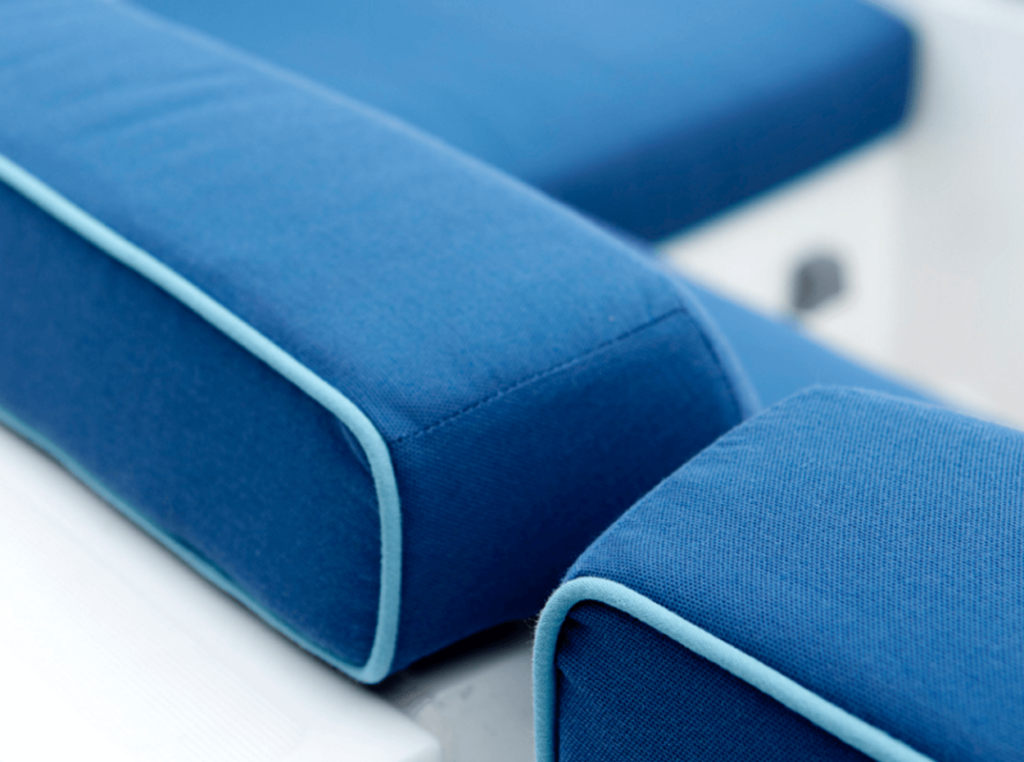
Foam Is Just as Important as the Outer Covering
The visible upholstery often receives most of the attention, but the foam underneath determines much of the seating experience.
Poor-quality or deteriorated foam can lose its shape, create uneven surfaces, and reduce passenger support. Even premium upholstery may look disappointing when installed over worn cushioning.
When choosing boat seat materials, owners should therefore consider the complete seating structure.
Important factors include:
- Foam density and firmness
- Cushion thickness
- Resistance to compression
- Water management
- Support for different seating positions
Marine environments also make moisture management particularly important. Appropriate foam, drainage, and ventilation can help reduce the chance of water remaining trapped inside cushions.
Matching Materials to Different Areas of the Boat
Not every seat faces the same conditions. A captain’s chair may experience constant sunlight and repeated use, while cabin seating usually receives more protection.
Bow cushions can be exposed to wind, rain, and direct sunlight. Cockpit seating may encounter water spray and frequent contact with wet clothing.
This means that choosing one material for the entire vessel is not always the most practical solution.
Owners should consider the location of each seating area, its exposure level, and how frequently it will be used. Matching materials to these conditions can help maintain a consistent appearance without overlooking practical requirements.
Color and Texture Influence the Interior Style
Performance should come first, but appearance still matters. Seating often occupies a large portion of the visible interior, making color and texture important design elements.
Light shades can create a bright, spacious atmosphere. Darker colors may provide stronger contrast and can complement modern boat interiors. Two-tone combinations can also highlight cushion shapes and create a more customized appearance.
Texture adds another layer of visual interest. Smooth finishes can support a minimalist design, while subtle grain patterns or contrasting panels can make seating look more distinctive.
The best approach is to select finishes that complement the boat’s flooring, dashboard, cabinetry, and other interior details.
Maintenance Can Extend Material Life
Even high-quality marine products require regular care. Salt deposits, sunscreen, dust, and spills can accumulate during normal boating activities.
A simple maintenance routine can help prevent unnecessary deterioration:
- Remove salt residue after outings.
- Clean spills as soon as possible.
- Use products recommended for the selected material.
- Avoid harsh chemicals and abrasive tools.
- Allow wet cushions to dry properly.
- Inspect seams and stitching for early damage.
Owners should always follow the manufacturer’s care instructions. A cleaning product suitable for one type of vinyl or fabric may not be appropriate for another.
When Should Boat Seating Be Updated?
Visible cracking, fading, loose stitching, and collapsed cushions can indicate that seating needs attention. However, the condition of the underlying foam and structure also matters.
In some cases, replacing the covering may be sufficient. In others, restoring the seating properly requires new foam, repaired panels, or changes to the cushion construction.
A professional assessment can help determine which components need attention and whether restoration or replacement makes more sense.
Final Thoughts
Selecting suitable boat seat materials involves balancing durability, comfort, appearance, and maintenance. Marine vinyl, outdoor fabrics, and properly chosen cushioning each offer different advantages, but their performance depends on the conditions in which they are used.
By considering exposure, seating location, construction quality, and overall design, boat owners can make more practical decisions and create interiors that remain comfortable and attractive through many boating seasons.
For more articles about boating, marine design, and boat maintenance, you can explore additional resources here.

