A comfortable marine interior depends on more than an attractive design. The materials beneath and around every cushion must handle sunlight, moisture, salt, frequent cleaning, and constant use. Choosing the right boat upholstery material can therefore influence both the appearance and longevity of a vessel’s seating. For professional marine upholstery services, Boat Upholstery Broward specializes in custom upholstery for boats and yachts, helping owners create interiors suited to demanding conditions.
Why Material Selection Matters
Boat seating faces conditions that ordinary furniture rarely encounters.
Outdoor seating may remain exposed to intense sunlight for hours, while moisture and salt can reach surfaces during almost every trip. Passengers also bring sunscreen, food, drinks, and other substances onboard.
For these reasons, material selection should happen before design details are finalized.
A suitable boat upholstery material can provide a combination of:
- UV resistance
- Moisture resistance
- Easy cleaning
- Color retention
- Mold and mildew resistance
- Surface durability
The right balance depends on how and where the vessel operates.
Marine Vinyl Remains a Popular Option
Marine vinyl continues to be widely used for boat seating.
Its popularity comes from the combination of durability, flexibility, and design variety. Modern marine vinyl is available in numerous colors and textures, allowing owners to create sophisticated interiors without choosing materials that are unsuitable for marine conditions.
A quality boat upholstery material should also feel comfortable during extended use. This makes texture and surface finish important considerations alongside durability.
Climate Should Influence Your Decision
Different boating regions create different challenges.
Boats operating in warm coastal areas may experience intense UV exposure, humidity, and saltwater. Vessels used on northern lakes may face seasonal storage and significant temperature changes.
The local environment should influence the selection of a boat upholstery material.
Owners should think about:
- Average temperatures
- Sun exposure
- Freshwater or saltwater use
- Humidity levels
- Seasonal storage
- Frequency of use
Matching materials to the environment can help prevent premature deterioration.
Foam Is Part of the Material Equation
The exterior covering receives most of the attention, but the foam underneath also affects seating performance.
Repeated pressure can compress foam and change the shape of cushions. Moisture can create additional problems if it reaches the interior.
When restoring seating, owners should inspect the cushioning rather than automatically replacing only the exterior.
A complete boat upholstery material upgrade may include new foam selected according to the intended use of the seating.
Texture Can Improve the Interior
Material choice also affects the visual character of a boat.
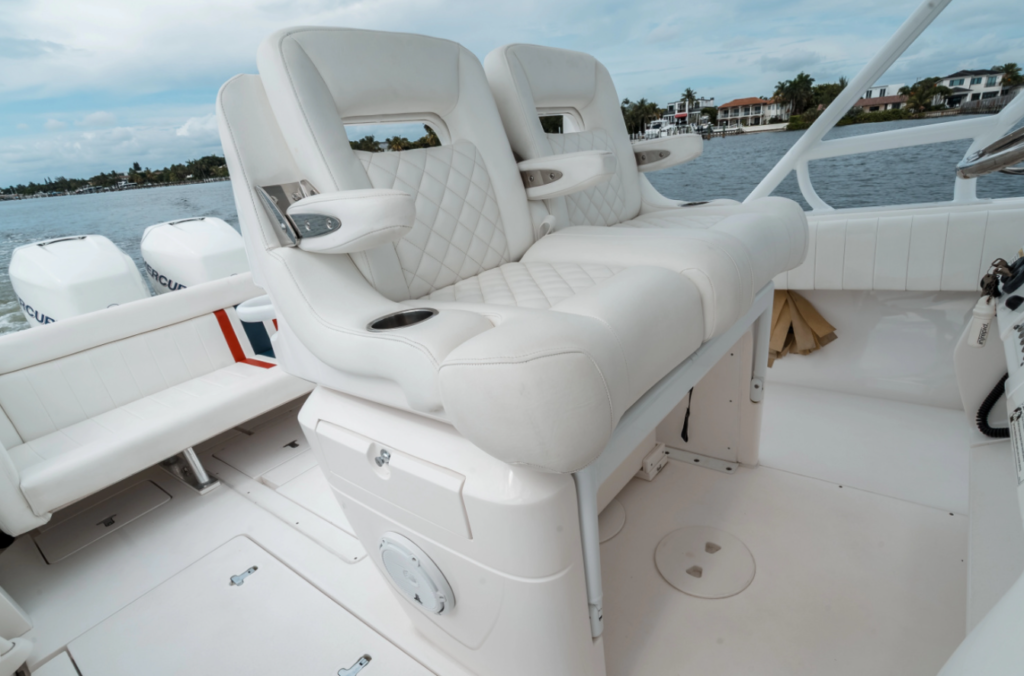
Smooth surfaces can create a minimalist appearance, while subtle textures can add depth. Combining different finishes can make larger seating areas look more sophisticated.
Owners can use texture to create contrast without introducing excessive colors.
For example, a smooth center panel combined with lightly textured side sections can give a boat upholstery material installation a more tailored appearance.
Color and Performance Can Work Together
Marine interiors no longer need to choose between attractive design and practical performance.
Manufacturers offer materials in a wide range of colors, from neutral tones to deeper coastal shades. This allows owners to coordinate seating with flooring, cabinetry, walls, and exterior accents.
Popular combinations include:
- White with navy
- Gray with black accents
- Sand with cream
- Blue with light neutrals
- Neutral colors with contrasting piping
The strongest designs consider both visual appeal and environmental exposure.
High-Traffic Areas Need Durable Solutions
Not every seating area experiences the same amount of wear.
Helm seats may receive constant use and direct sunlight. Cockpit cushions can encounter water, wet clothing, food, and sunscreen. Interior cabin seating may experience less exposure but still receive regular passenger use.
A boat upholstery material should therefore match the location of the seat.
Using particularly durable materials in high-use areas can help extend the life of the interior.
Easy Cleaning Adds Everyday Value
Marine seating inevitably becomes dirty.
Salt residue, sunscreen, spills, and dust can accumulate quickly during the boating season. Materials that allow owners to clean these contaminants easily can make regular maintenance much less demanding.
A practical boat upholstery material should support simple cleaning without requiring complicated procedures.
Owners should still follow the manufacturer’s care recommendations and avoid harsh products that could damage the surface.
Good Maintenance Protects the Material
Even premium materials need regular attention.
After a day on the water, owners can wipe down exposed seating and remove salt residue. Wet cushions should dry completely before storage, especially when temperatures and humidity remain high.
Useful habits include:
- Cleaning seating after regular outings
- Removing salt deposits
- Drying cushions thoroughly
- Addressing spills quickly
- Checking seams for damage
- Covering exposed seating during storage
These steps can help preserve the appearance and performance of a boat upholstery material for longer.
Design Trends Continue to Evolve
Modern boat interiors increasingly combine practical materials with personalized styling.
Two-tone seating, decorative stitching, contrast piping, and custom embroidery can all create a distinctive look. Owners can also coordinate different textures across cushions and panels.
The goal is not simply to follow the latest trend. A successful design should remain attractive while supporting the way the boat is actually used.
Final Thoughts
Choosing marine upholstery is an investment in both comfort and long-term interior performance. The right material can help seating withstand sunlight, moisture, salt, repeated cleaning, and everyday use.
A carefully selected boat upholstery material also gives owners greater freedom to create a personalized interior without sacrificing practicality. When quality materials, appropriate cushioning, thoughtful design, and regular maintenance work together, a boat interior can remain comfortable and attractive through many seasons on the water.
More interesting articles you can explore here.